The Short Version: A Meta ad hook is the first 1-2 lines of copy your customer reads. It decides whether they keep reading or keep scrolling. Most Shopify brands bury their best message too far down. The three hook angles that consistently work are the pain-point punch, the unexpected outcome, and the identity trigger. Getting all three right requires a clear picture of your customer and a commitment to testing.
If your Meta ads are not converting, it is probably not your product. It is your hook.
Most Shopify brands write ads that open with the brand name, a generic benefit, or a statement that means nothing to someone who has never heard of them. By the time the compelling part arrives, the customer has already scrolled past.
The right Meta ad hooks for Shopify stop that scroll before it happens. This post covers the three angles that consistently drive clicks and sales, why each one works, and what to watch for when applying them.
Why Most Meta Ads Get Scrolled Past
Most Shopify brands do not have a product problem. They have a hook problem.
Their ads open with the product name. Or a broad benefit statement. Or, worse, nothing that connects to the customer’s actual world. As a result, the scroll keeps moving.
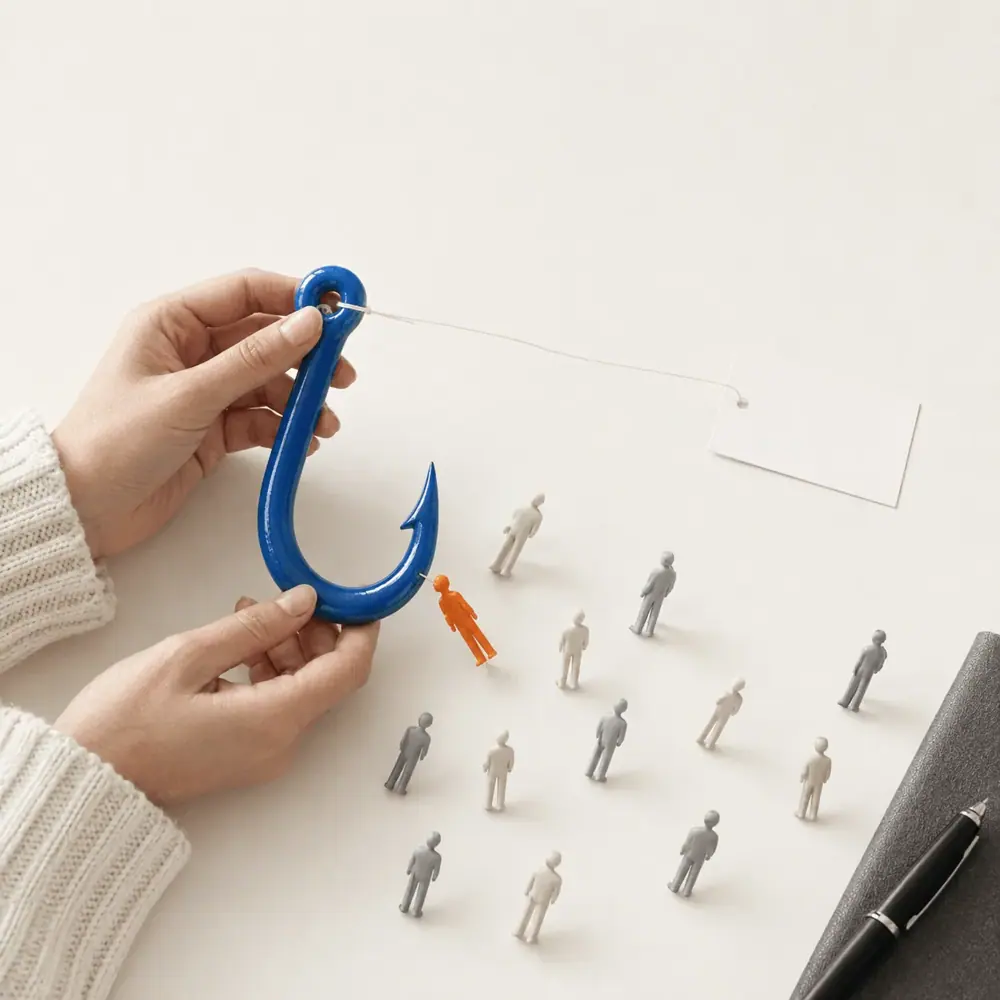
A Meta ad hook is the first thing your customer reads. In practice, it is the first 1-2 lines of copy. On video, it is the first 3 seconds. It decides whether they lean in or move on.
Most brands bury the good stuff three paragraphs down. By then, the customer is already on someone else’s ad.
So, what actually stops the scroll? Three hook angles work consistently across Shopify categories. However, they are not magic formulas you apply once and walk away from. They work because they connect to what the customer is already thinking before they see your ad.
The Three Meta Ad Hooks That Work for Shopify
Hook 1: The Pain-Point Hook
People do not buy products. They buy solutions to problems. So, lead with the problem they already have before you mention your product at all.
Pain-point Meta ad hook examples:
- “Tired of every raincoat fitting like a garbage bag?”
- “Struggling to find a gift that doesn’t feel generic?”
- “Sick of your baby’s clothes shrinking after one wash?”
This hook works because it is relatable, specific, and emotion-driven. It makes the reader feel seen before they have looked at anything you are selling.
The key, however, is specificity. “Tired of bad skincare?” is too vague to stop anyone. “Tired of spending $80 on a moisturiser that makes your skin worse by lunchtime?” reads like a real thought the customer has already had. That is the difference.
The more specific the problem, the more your ideal customer feels like you wrote this ad for them personally. Specificity is what separates hooks that convert from hooks that get scrolled past.
Hook 2: The Unexpected Outcome Hook
This angle stops the scroll by promising a result the customer did not expect from a product like yours.
Unexpected outcome hook examples:
- “What if your skincare routine actually saved you 30 minutes every morning?”
- “This picnic rug cleaned up faster than my toddler made the mess.”
- “A backpack that fits your entire weekend and your laptop.”
This hook works because it builds curiosity and breaks a pattern the reader already holds. They thought they knew what your product did. Then they read the hook and realised they were wrong. That gap is what creates the click.
In practice, finding the unexpected outcome requires looking at your product from your customer’s perspective, not your own. What do they gain that they did not know they would care about? What result surprises them, even after they experience it? That is where the hook lives.
Hook 3: The Identity Trigger Hook
People stop scrolling when they feel seen. This hook works by calling out exactly who the ad is for, before saying anything about what you sell.
Identity trigger hook examples:
- “For women who actually walk the dog in the rain, not just post about it.”
- “Busy mums who love cute and comfy? This is for you.”
- “For tradies who need a watch that won’t break when life does.”
The identity trigger works because it uses the reader’s self-image to make the product feel like it already belongs to them. Consequently, it creates an instant sense of relevance before they have read a single word about features or pricing.
This is one of the strongest Meta ad hooks for Shopify brands with a clearly defined target customer. However, it only works if you know your customer well enough to use their language, not marketing language. The moment it sounds like a marketer wrote it, the effect disappears.
Why Writing Effective Meta Ad Hooks Is Harder Than It Looks
The three angles above are a useful starting point. They are not a formula you apply once and repeat forever.
Writing Meta ad hooks that consistently convert requires:
- A clear picture of your ideal customer and what they are thinking before they see your ad
- Language that sounds like your customer, not a copywriter
- Multiple versions to test, because what works varies by audience, product, and season
- An understanding of where in the buying journey your audience sits
For example, a cold audience needs a hook that leads with a problem or a surprising outcome. A warm audience, by contrast, responds better to identity, urgency, or trust. Using the same Meta ad hook for both audiences wastes budget and muddies your results.
Furthermore, even a great hook does not fix a weak offer, a slow landing page, or a product image that does not convert. The hook gets the click. The rest of the system closes the sale.
That is why the brands that see consistent ROAS improvements are not just writing better hooks. They are building a full creative system around their customer, their offer, and their campaign structure. The hook is the entry point, not the whole answer.
According to Meta’s Business Help Centre, the opening of any ad is the most critical factor in driving engagement. Getting that first line right is the highest-leverage move in your creative.
Why AI Copy Is Making This Problem Worse
There is a new layer to this problem. Scroll through Facebook or Instagram right now and you will notice something: a lot of ads sound the same.
AI copywriting is a big part of the reason. When everyone uses the same tools and the same prompts without a real understanding of their brand voice or their customer’s actual world, the output converges. Every hook starts to feel familiar. Every ad starts to feel forgettable.
The issue is not that AI produces bad copy. It is that AI without real customer knowledge produces generic copy. And generic copy cannot stop the scroll, because the reader has seen a version of it twelve times already today.
You know when a brand has done this well. They say something unexpected. Something that catches you off guard. Something that sounds like it was written by someone who actually understands your situation, not a tool that has averaged a million ads together.
That is the standard your hooks need to hit. And it is harder to hit when everyone around you is taking the same shortcuts.
The way out of this is not to avoid AI. It is to ground everything in your actual customer, your actual language, and the specific problems your specific audience carries around with them every day. That is what stops your ad from blending into the noise.
One of the core modules in our 8-week Shopify Growth Marketing course is Magnetic Messaging. It helps Shopify brands dial into their brand tone of voice and map their customers’ real pain points, frustrations, and the outcomes they want. That is where copy starts to sound like itself, rather than like everyone else.
Furthermore, every piece of content we write, whether it is an email, a blog, a Meta ad, a Google ad, or the text overlaid on an image, starts with a promotional blueprint. That blueprint takes time to understand the customer and put things in their language. And it always pushes toward saying something unexpected, rather than something obvious.
Meta Ad Hook Examples by Shopify Product Category
The right hook depends on what you sell and who you sell to. Here is how each angle shifts across different product categories:
Clothing and outerwear:
- Pain point: “Tired of outerwear that falls apart after one season?”
- Identity: “For women who dress for the weather, not the weather app.”
Baby and kids:
- Pain point: “Sick of cute clothes that don’t survive the first wash?”
- Unexpected outcome: “Soft enough for sensitive skin, tough enough for three kids.”
Home and lifestyle:
- Identity: “For people who actually use their outdoor furniture.”
- Unexpected outcome: “The picnic set that cleans up before the cheese does.”
In each case, the hook leads with something the customer recognises about themselves or their life. The product comes later. That is the pattern that consistently works.
For more on building a full Meta ad system around your Shopify store, read the Meta ads funnel guide for Shopify and our breakdown of how to make better Meta ads.
If you want a structured approach to writing and testing your own hooks, our Facebook and Meta Ads training covers hook writing, audience strategy, and campaign structure in a practical, hands-on format.
FAQ: Meta Ad Hooks for Shopify
How long should a Meta ad hook be?
One to two lines. If the hook does not land in three seconds, the customer moves on. Shorter is almost always stronger. Cut anything that does not directly earn the next line of reading.
How many Meta ad hook variations should I test at once?
Run two to three hook angles per ad set. This gives you faster learning without spreading budget too thin. Test one variable at a time so you can clearly identify what drives the difference in performance.
Should my Meta ad hooks change for warm versus cold audiences?
Yes, and this matters more than most brands realise. Cold audiences respond to problem-led and unexpected outcome hooks. Warm audiences, however, respond better to identity, urgency, and trust-based hooks. Using the same Meta ad hook for both audiences dilutes performance and makes results harder to read.
What if my product does not solve an obvious problem?
Most products solve more problems than their owners realise. Customers buy for emotional reasons as much as practical ones. An outcome that feels minor to you can be the exact thought that drives the click. The unexpected outcome hook works particularly well for products that look like nice-to-haves on the surface.
What makes a Meta ad hook fail?
Three things consistently kill hooks: vague language, leading with the brand or product name instead of the customer, and writing for yourself instead of your audience. The most common mistake is opening with “Introducing [Brand Name]” or a feature statement that means nothing to someone who has never heard of you before.
If your Meta ads are getting traffic but not the sales to match, the hook is often only part of the problem. The offer, the landing page, and the campaign structure all play a role in where the sale is being lost.
Our Meta Ads management service includes hook development, audience segmentation, and ongoing creative testing as part of every engagement.
A Business Scalability Audit is the starting point for most brands. It gives you a clear view of where your Meta ads are leaking and what to fix first. Free. 30 minutes. No obligation.